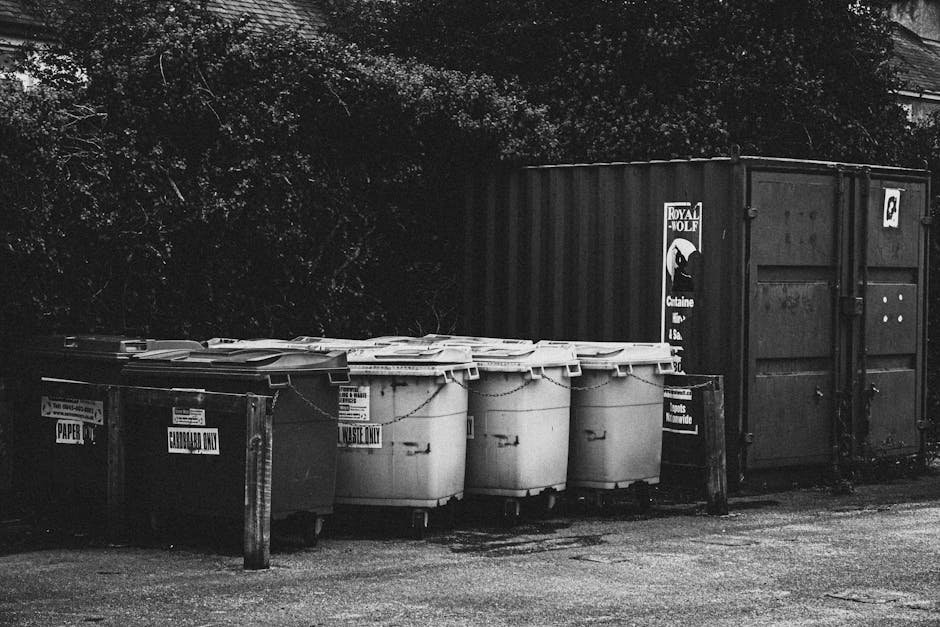
Bulky waste rules in Enfield Council: Disposal vs removals
If you live in Enfield and you've got a sofa blocking the hallway, a mattress leaning in the spare room, or a washing machine that's far too awkward to shift on your own, the question usually comes down to one thing: should you book council bulky waste disposal or arrange a removal service? Bulky waste rules in Enfield Council: Disposal vs removals can feel simple at first, but once you start looking at access, item restrictions, booking rules, and the amount of lifting involved, the decision gets more nuanced. This guide breaks it down in plain English, so you can choose the safest, cleanest, and least stressful route.
Truth be told, most people do not need a lecture on waste policy. They need to know what counts as bulky waste, what Enfield will and won't take, when a removals company is the better call, and how to avoid the annoying last-minute surprise of a missed collection or rejected item. Let's get into it.
Table of Contents
- Why the rules matter
- How disposal and removals work
- Key benefits of choosing the right option
- Who needs this and when it makes sense
- Step-by-step guidance
- Expert tips for better results
- Common mistakes to avoid
- Tools, resources and recommendations
- Law, compliance and best practice
- Options and comparison table
- Case study or real-world example
- Practical checklist
- Conclusion
- Frequently asked questions
Why Bulky waste rules in Enfield Council: Disposal vs removals Matters
Bulky waste is not the same as everyday rubbish. That sounds obvious, but it catches people out all the time. A broken wardrobe, an old armchair, a fridge freezer, or a dismantled bed frame may be too large for normal bin collections, and the way you dispose of it can affect cost, convenience, and even whether the item is accepted at all.
In Enfield, the main reason the rules matter is that bulky items usually need a deliberate plan. They may require a booked council collection, a private removal job, a trip to a reuse or disposal route, or a combination of those. If you choose poorly, you can end up with an item left on the pavement, an access problem on collection day, or extra time spent sorting a half-dismantled pile in the rain. Not ideal, frankly.
There's also a practical side. A council bulky waste collection may suit one or two items if they are ready to go. A removal service can make more sense when you have several heavy pieces, awkward stairs, limited parking, or a time-critical move. That difference is the heart of the decision.
Expert summary: The best option is rarely just the cheapest one. For bulky waste, the right choice is the one that matches your item type, access, timeline, and how much handling you want to do yourself.
How Bulky waste rules in Enfield Council: Disposal vs removals Works
At a basic level, council bulky waste disposal is a local-authority collection service for larger household items that do not fit into normal bins. Removals, by contrast, are private services that collect, carry, and transport items for you, often with more flexibility and less lifting on your side.
The key difference is responsibility. With council collection, you usually need to prepare the items, place them in the agreed location, and make sure they meet the service rules. With a removal service, the team typically handles the lifting, loading, and transport. That can be a huge relief if you have a heavy sideboard, a tight stairwell, or just no spare time.
There are a few practical things people often forget:
- Some items are simply easier to remove than to book through a council process.
- Items may need to be separated, emptied, or dismantled first.
- Fridge freezers and other specialist items may follow different handling expectations.
- Access matters: front garden, communal entrance, basement flat, top-floor walk-up, all of that can change the best option.
If you are already in moving mode, services such as home moves or house removalists can be more practical than treating each bulky item separately. And if the item is just one large piece of furniture, a dedicated furniture pick-up can be the cleanest fix. Nice and simple, when it works.
What counts as bulky waste?
Usually, bulky waste means household items that are too large or awkward for standard collection bins. Common examples include:
- sofas and armchairs
- beds and mattresses
- wardrobes and cabinets
- tables and chairs
- white goods such as washing machines or cookers
- large rugs, shelves, and other sizeable household fixtures
The exact acceptance rules can vary by council service and item condition, so it is always wise to check before you book. Something that looks straightforward in the hallway may not be treated as straightforward by the collection team. Annoying, but that's the reality.
Disposal vs removals: the core decision
If you want the shortest version: council disposal is usually best for a small number of standard bulky items that are ready at the kerbside or agreed collection point. Removals are usually better when you need lifting help, multiple items moved from inside the property, or a more flexible time window.
A lot depends on whether your main need is compliance or convenience. If you are focused on following local disposal rules at the lowest possible cost, council collection is often the first place people look. If you are focused on speed, ease, and proper handling, a removal team may be the better fit. Not glamorous, but very real.
Key Benefits and Practical Advantages
Making the right choice saves more than money. It saves effort, stress, and those awkward moments where you realise a sofa will not fit through the doorway without removing the legs first.
- Less physical strain: heavy lifting is the most obvious risk. A single bulky item can be manageable; three or four items on stairs are another story.
- Better time control: removal services can often fit around your move-out schedule, clearing day, or office handover more neatly.
- Fewer access headaches: if you live in a narrow terrace, above a shop, or in a block with limited parking, professional removals can reduce friction.
- Cleaner premises: a quick collection before handover helps you leave the property tidy and avoids those last-moment dashes across the hall.
- Potential reuse and sorting opportunities: when items are in usable condition, some removal teams can separate reusable furniture from true waste, which is better than sending everything down one route.
For local businesses, the advantages can be even more practical. Office changes, refits, and storage clear-outs often involve a mix of desks, chairs, monitors, and packaging debris. In that situation, a commercial removal approach such as commercial moves or office relocation services can keep the job organised instead of turning the place into a maze of half-moved furniture.
And if you need a vehicle as part of the job, a man and van, man with van, moving truck, or removal truck hire can be the difference between "sorted by lunch" and "still trying to wedge a chest of drawers into a hatchback at 7pm."
Who This Is For and When It Makes Sense
This topic matters if you are a renter, homeowner, landlord, student, small business owner, or anyone clearing a property in Enfield. It also matters if you are helping parents downsize, handling an estate clearance, or making a quick switch from old furniture to new.
Here are a few common scenarios where the disposal-versus-removal decision comes up:
- End of tenancy: you need to clear a sofa, bed base, or broken chair before checkout.
- House move: there is furniture you no longer want to take with you.
- Office relocation: old desks, shelving, and meeting chairs need to be removed without disrupting operations.
- Student move: a few bulky items have accumulated over time, and the flat is starting to resemble a storage cupboard.
- Furniture replacement: new items are arriving and the old ones need to go first.
To be fair, sometimes the answer is obvious. If you only have one manageable item and you can move it outside safely, council disposal may be enough. If you have a full room of heavy things, or a mattress trapped up three flights of stairs, you probably want actual removal help. No judgement. Just practicality.
Step-by-Step Guidance
If you want the process to run smoothly, work through it in order. A rushed decision usually leads to an awkward collection day.
- List every bulky item. Write down what you need removed, including size, condition, and whether it can be dismantled.
- Check which items are acceptable. Some items may be handled differently depending on type, condition, or local rules.
- Decide how much lifting you can safely do. If the item needs two people, a trolley, or stair carrying, that matters.
- Assess access. Think about parking, lifts, narrow halls, front garden gates, and whether items need to pass through shared spaces.
- Choose disposal or removal. If the item is simple and ready to go, council disposal may be enough. If not, a removal service is usually cleaner and easier.
- Prepare the items. Remove contents, bag loose parts, detach unsafe items, and tape sharp edges where sensible.
- Keep the route clear. Doors open, hallway clear, pets away, and nothing stacked where it can topple.
- Confirm timing and instructions. Collection day is not the time for ambiguity. Know where items should be left and what happens if the access point changes.
A small but useful tip: if you are dealing with furniture and household clutter at the same time, start with the biggest item first. Once the sofa goes, suddenly the room breathes again. Strange how that works.
Expert Tips for Better Results
After enough collections, a few patterns become obvious. The people who have the smoothest experience tend to do the boring prep work early. That is usually the win.
- Photograph the items before booking. It helps you remember dimensions, condition, and any damage or special handling needs.
- Dismantle safely where possible. Flat-pack furniture, bed frames, and large shelving often become easier once broken down properly.
- Separate reusable items from true waste. If a table or chair is still usable, keep it together rather than sending it straight to disposal.
- Plan around building access rules. Communal entrances, loading bay times, and lift bookings can shape the whole job.
- Choose the smallest sensible service. If you only need one or two items moved, a focused collection is often better than overbooking a big vehicle.
- Leave a clear path for the collection team. This sounds tiny. It is not tiny on the day.
One more thing: do not underestimate odours or spills. A mattress that has been sitting damp in a corner, or a broken appliance with residue inside, can make a simple job messy very quickly. A little prep avoids a lot of grim faces.
If you want support with the physical side of a move, services such as packing and unpacking services can also help you clear a room faster and reduce the chance that you accidentally leave useful items mixed in with waste.
Common Mistakes to Avoid
Most bulky-waste problems are preventable. The trouble is, the mistakes often happen when people are busy, tired, or trying to finish a move at the same time. Which, let's face it, is most of us.
- Leaving items too late: If you wait until the day before handover, your options shrink fast.
- Assuming everything can be collected as-is: Some items need to be separated, emptied, or made safe first.
- Ignoring access issues: A collection that seems simple on paper can fail if the vehicle cannot get close enough.
- Mixing waste and reusable goods: Once things are piled together, sorting becomes slow and confusing.
- Underestimating weight: A bulky item can be heavier than it looks, especially if it contains metal frames or internal fittings.
- Not checking property rules: Flats, estates, and managed buildings often have their own collection constraints.
A common one is the "I'll just drag it downstairs myself" plan. Sometimes that is fine. Sometimes it ends with a scraped wall, a twisted ankle, and a very grumpy afternoon. Not worth it.
Tools, Resources and Recommendations
You do not need fancy equipment, but a few basic tools make bulky waste handling much easier and safer.
- Measuring tape: useful for checking doorway widths and whether an item will fit through the exit.
- Strong gloves: helpful for gripping rough edges, staples, or splintered wood.
- Blanket or moving wrap: protects walls, door frames, and the item itself during removal.
- Basic tools: screwdriver, Allen key, or spanner for dismantling furniture.
- Tape and bags: useful for screws, bolts, and smaller loose parts.
For larger household moves, it can be sensible to combine bulky-item clearance with broader moving help. If that sounds like your situation, man with van support can be a practical middle ground, especially when you are clearing a room, moving furniture, and taking a few extra items away at the same time.
When the job is bigger than one van load, a moving truck or removal truck hire may be the more sensible route. It sounds obvious, but people often realise it only after they have made three separate trips and lost half the afternoon.
Law, Compliance, Standards, or Best Practice
Bulky waste handling sits within broader expectations around safe waste management, property access, and avoiding illegal disposal. You do not need to become a legal expert, but you do need to stay on the right side of good practice.
In the UK, the practical rule of thumb is simple: only use legitimate disposal routes, do not leave items where they create hazards, and make sure anything you arrange is handled responsibly. If you are using a private removal provider, choose one that can lawfully transport waste and household goods and that explains its process clearly. If you are using a council service, follow the booking and presentation instructions exactly, because missed details are what cause most collection problems.
Best practice also means thinking about safety:
- do not block footpaths or shared entrances
- do not place sharp, damaged, or unstable items where they may injure someone
- keep children and pets away from the collection route
- do not attempt unsafe lifting alone
- make sure appliances are disconnected properly before moving
If a situation feels uncertain, it is usually better to pause and ask for help than to force the issue. That is not overcautious. That is just sensible.
Options, Methods, or Comparison Table
Here is a straightforward comparison to help you decide whether council disposal or a removal service is more suitable.
| Option | Best for | Pros | Trade-offs |
|---|---|---|---|
| Council bulky waste disposal | One or a few standard household items | Usually simple, local, and good for basic clear-outs | May have item restrictions, booking rules, and limited flexibility |
| Private removal service | Heavy, awkward, multiple, or inside-property items | More flexible, less lifting for you, often faster to organise | May cost more depending on item size, access, and distance |
| Man and van collection | Small to medium clear-outs | Good balance of help and flexibility | Not always the best choice for very large loads |
| Full removal team | Moves, clearances, and bulky jobs with stairs or access issues | Most hands-on support, useful for complex jobs | Usually the most comprehensive, so not always the lightest option |
As a quick rule: choose the smallest service that safely covers the job. That keeps costs sensible and avoids paying for capacity you do not need.
Case Study or Real-World Example
A typical Enfield scenario goes like this. A family is moving from a two-bedroom flat and needs to leave behind a worn-out sofa, a broken chest of drawers, and an old mattress. At first, they think council disposal will cover everything. Then they notice the sofa has to come down a narrow stairwell, the mattress is awkward to carry, and the chest of drawers is too damaged to move in one piece.
After a bit of back-and-forth, they realise that disposal alone would mean doing the lifting themselves and making sure each item is presented correctly. Instead, they book a removal service to take the items from inside the flat, which saves time and reduces stress on moving day. It also means the hallway is cleared properly, the agent can inspect the property without clutter, and the family can focus on the move rather than arguing with a sofa that clearly thinks it owns the place.
That is the pattern you see again and again. When bulky waste is simple, disposal can be enough. When the job is physically awkward, time-sensitive, or mixed with a move, removals usually win on practicality.
Practical Checklist
Use this before you book anything.
- Have I listed every item that needs to go?
- Do I know whether each item is accepted by the disposal route I want to use?
- Can the item be carried safely without help?
- Is there enough space to remove it through doors, stairs, or lifts?
- Do I need it taken from inside the property?
- Is the item reusable, or should it go as waste?
- Have I cleared the route and protected floors or walls if needed?
- Do I know the collection time and where items should be placed?
- Would a removal service be easier than handling this myself?
- Have I left enough time before move-out or handover?
If you can tick most of those off with confidence, you are in a good place. If not, slow down a little and choose the option that reduces risk.
Conclusion
Bulky waste rules in Enfield Council: Disposal vs removals really comes down to one practical question: do you want the cheapest straightforward disposal route, or do you want the easiest end-to-end solution? For a small number of standard items, council disposal may be enough. For larger, heavier, awkward, or time-critical jobs, a removal service is often the calmer choice.
The smartest approach is to judge the item, the access, the timing, and your own capacity honestly. That one decision can save you a lot of lifting, wasted time, and last-minute frustration. And if you are already juggling a move, a clear-out, or an office change, it is absolutely fine to choose the route that makes the day smoother.
Get a free quote today and see how much you can save.
Sometimes the best clearance is the one that lets you breathe again.
Frequently Asked Questions
What counts as bulky waste in Enfield?
Bulky waste usually means large household items that do not fit into normal bins, such as sofas, mattresses, wardrobes, tables, and some appliances. If you are unsure, check the item against the service rules before booking.
Is council bulky waste disposal cheaper than hiring removals?
Often, yes, especially for one or two standard items. But cheaper is not always better if the item is heavy, hard to access, or needs to be taken from inside the property. In those cases, a removal service may save time and effort that is worth the extra cost.
Can I leave bulky items on the pavement for collection?
Only if the item has been booked for collection and you have followed the placement instructions. Leaving bulky items out without a proper arrangement can create an obstruction and may lead to a missed or refused collection.
Do I need to dismantle furniture before disposal?
Sometimes dismantling helps, especially for large wardrobes, bed frames, or shelving. It depends on the item and the collection method. Smaller pieces are generally easier to move, safer to handle, and less likely to cause access problems.
When is a removal service better than council disposal?
A removal service is usually better when you have multiple heavy items, stairs, poor parking, tight access, or a deadline. It is also the better choice if you do not want to do the lifting yourself.
Can bulky waste include white goods like fridges or washing machines?
Yes, but these items may need special handling, and not every service treats them the same way. Make sure you confirm whether the item is accepted and whether any preparation is required before collection.
What should I do with items that are still usable?
If something is in decent condition, consider reuse or donation routes where appropriate. Even if you are clearing space quickly, separating usable furniture from true waste can save resources and sometimes reduce handling complexity.
How far in advance should I book bulky waste removal?
As early as you can, especially if your removal is tied to a move-out date or property handover. Leaving it late can limit your options and make access planning much harder. A little breathing room helps.
Can a man and van help with bulky waste?
Yes, for small to medium clear-outs, a man and van or similar service can be a practical middle ground. It is often useful when you need both lifting help and transport, but not a full-scale removal team.
What if I have bulky waste and moving boxes at the same time?
That is where combined support can be useful. A move can be made much simpler with help from services such as home moves and packing and unpacking services, especially if you want the bulky items cleared before the rest of the house is packed.
Is there a risk of being refused collection?
Yes, if the item does not meet the service requirements, is unsafe, is not presented correctly, or has not been booked properly. That is why preparation matters. A quick check beforehand usually saves a lot of hassle later.
What is the safest option for heavy furniture?
The safest option is usually whichever one avoids unnecessary lifting and gives you enough help to move the item cleanly. For many people, that means booking a removal service rather than trying to shift large items alone. Safety first, always.
If you are comparing options and still feel unsure, start with the item itself. Once you know what has to go, the right choice is usually easier to see than you think.